Guide
Weight Loss Supplements That Work? A Buyer's Checklist Before You Pay
No weight loss supplement has strong evidence, so choose on honesty and safety instead. Check for a full label with amounts, doses that match studies, no ad claims the FTC calls false, real reviews and no clash with your medicines. Scored on the same list, Leaftide passes on label and directions but hides its amounts in one 1000 mg blend.
Written by the Leaftide editorial teamUpdated
The honest start
Do weight loss supplements that work exist?
Not in any strong sense. The NIH says little is known about whether weight-loss supplements work (NIH ODS, Weight-loss supplements).
Most products mix ingredients tested alone, briefly, in small groups. The meter rates the five weight ingredients in Leaftide on their own; the top one, garcinia, shows only a small, conflicting effect.
So change the question. Instead of "which one works best?", ask "which one is honest, safe for me and fairly priced?" The eight checks below answer that for any bottle, including the one we sell.
The checklist
What should you check before buying a weight loss supplement?
Eight checks, in the order you meet them: label, formula, rules, marketing, reviews and your own health.
Read the full label
Supplement Facts, directions, warnings and who makes or sells it.
Look for amounts
Each ingredient should show its own dose, not one blend total.
Compare doses with studies
A tiny dose of a studied ingredient is not the studied product.
Know the FDA rules
No supplement is approved before sale. Badges are not approval.
Scan the ad for red flags
Fast results, no effort and fake endorsements.
Question the reviews
Bursts of five-star posts and celebrity quotes deserve doubt.
Check your medicines
Diabetes drugs, water pills and others can clash with herbs.
Check liver cautions
Some weight ingredients have liver injury reports.
Label and blends
Is a proprietary blend a bad sign on a supplement label?
It is a transparency problem. A proprietary blend shows only its total weight, listing ingredients from most to least (FDA, Labeling guide).
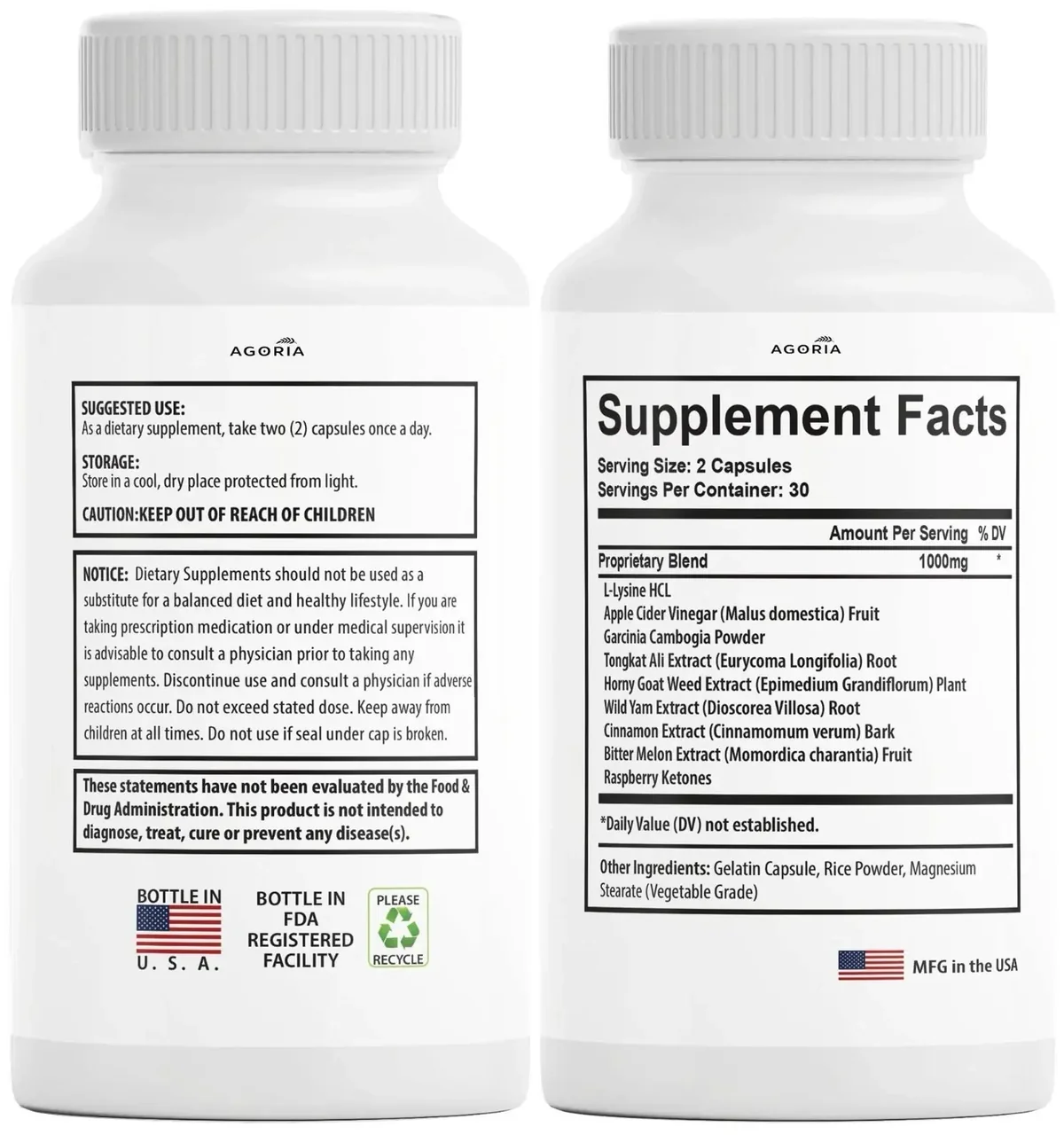
A blend is legal. It also means you cannot tell whether any ingredient is present at a useful amount. Label order gives one clue: the third ingredient in a 1000 mg blend can be at most about 333 mg, and often far less.
- Supplement Facts with a serving size and a dose for each ingredient
- Other ingredients, including the capsule material
- Clear directions and a maximum dose
- Warnings that name specific drugs or conditions
- The name and address of the maker or distributor
Our Leaftide label breakdown shows each of these on a real bottle.
Doses vs trials
Do supplement doses match the studies?
Often not. Here is the label math for Leaftide next to what research used.
| Ingredient (label position) | Most it could be | What research used | Source |
|---|---|---|---|
| Garcinia cambogia (3rd) | About 333 mg | 2.4 to 3 g of garcinia a day in two 12-week trials | (NIH ODS, Weight-loss supplements) |
| Apple cider vinegar (2nd) | About 500 mg | Small studies; no meaningful weight loss shown | (Mayo Clinic, Apple cider vinegar) |
| Tongkat ali (4th) | About 250 mg | Traditional 100 to 400 mg a day, not for weight | (LiverTox, Tongkat ali) |
| Bitter melon (8th) | About 125 mg | Blood sugar data limited and low quality | (MSKCC, Bitter melon) |
| Raspberry ketones (9th) | About 111 mg | Only tested in combination products | (NIH ODS, Weight-loss supplements) |
The real amounts are not printed. Each could be far below the ceiling shown.
FDA rules
Does the FDA approve weight loss supplements?
No. The FDA does not have the authority to approve dietary supplements before they are sold (FDA, Supplement Q&A).
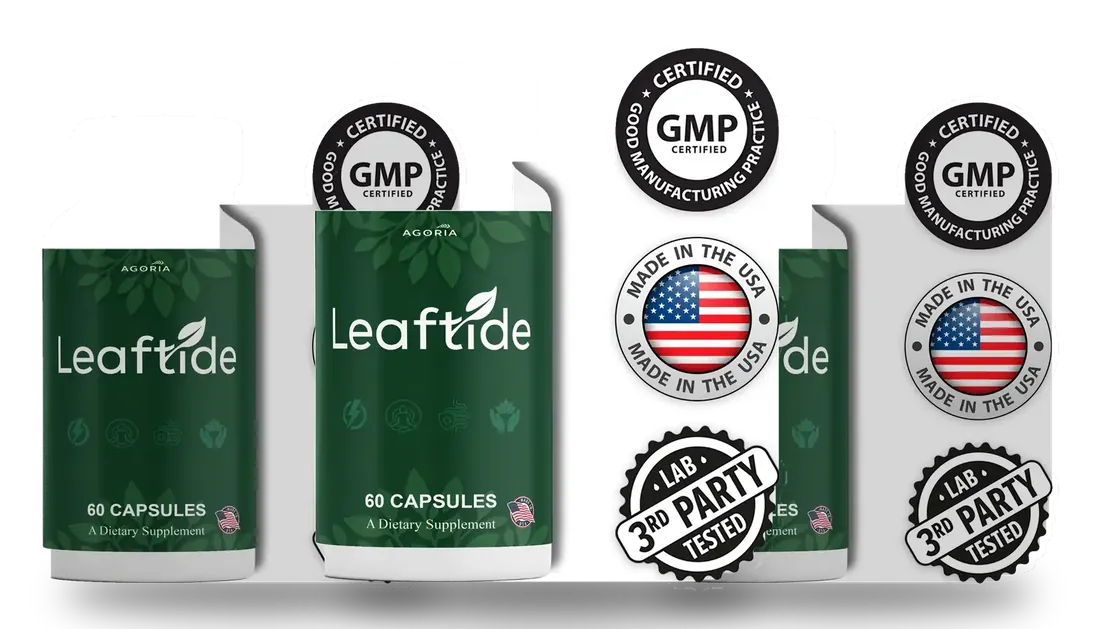
Makers are responsible for safety and honest labels. The FDA steps in after problems appear. A line such as "made in an FDA registered facility" describes a registration, not a review of the product (FDA, Approval myths).
"FDA registered", "GMP certified" and "lab tested" can all be true and still name no lab, no report and no result. Ask the seller for the certifier or the test report. See how we treat testing claims.
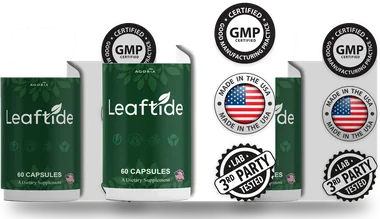
Ready to try Leaftide?6 bottles $73 on the live listing · about $0.41 a day · free U.S. shipping
Order nowAd red flags
What are the red flags in weight loss supplement ads?
The FTC lists claims that are always false. Lightning-fast weight loss is always a scam (FTC, Weight-loss ads).
No effort needed
No pill lets you skip diet or exercise, and no pill lets you eat anything and still lose.
Big numbers, fast
No product can make you lose 30 pounds in 30 days, and none works for everyone.
Pressure tactics
Countdown timers, "last chance" prices and surprise subscriptions push you before you can check.
The NIH adds that the FDA and FTC can act on unsupported weight-loss claims (NIH ODS, Weight-loss supplements). More on ad tricks in our red flags article.
Reviews
How can you tell if supplement reviews are fake?
Often you cannot, which is the point. The FTC says not to assume you can spot fakes (FTC, Online reviews).
Watch for a sudden burst of reviews, reviewers with no other history and praise that reads like an ad (FTC, Online reviews). Since 2024, an FTC rule bans fake and AI-written reviews and fake celebrity testimonials, with civil penalties (FTC, Fake reviews rule).
A celebrity or "TV doctor" endorsing a weight pill is a strong warning sign. We publish no Leaftide ratings or quotes until real orders are matched, so our review slots stay empty for now.
Your health
Which health conditions need a check before a weight supplement?
Diabetes, water pills, liver disease, pregnancy and hormone-sensitive cancer top the list for common weight ingredients.
- Take insulin, diabetes pills or diuretics: bitter melon and vinegar can add to their effects (MSKCC, Bitter melon) (Mayo Clinic, Apple cider vinegar)
- Have liver disease: garcinia products have liver injury reports (NIH ODS, Weight-loss supplements)
- Are pregnant, nursing or trying to conceive
- Have a hormone-sensitive cancer or take ED medicine
Bring the bottle, not a screenshot of the ad. Leaftide's specific cautions are in the interaction table.
Leaftide, scored
How does Leaftide score on the checklist?
Fair marks both ways: a full, readable label and a live price, but hidden amounts and weak evidence.
| Check | Result | Why |
|---|---|---|
| Full label | Pass | Supplement Facts, directions, notice and seal warning printed |
| Amounts | Fail | Nine ingredients in one 1000 mg blend |
| Doses vs studies | Unclear | Label math puts garcinia well under trial amounts |
| FDA wording | Pass | Standard FDA statement; the label claims no approval |
| Ad claims | Partial | Listing says "Weight Management Support Formula"; the brand panel says "Natural & Safe" |
| Reviews | None yet | No verified reviews published |
| Medicine warning | Partial | Says consult a physician; names no drug |
| Liver caution | Partial | Contains garcinia; the label gives no liver warning |
FAQ
Choosing a weight loss supplement: FAQ
What is the most effective weight loss supplement?
None stands out with strong evidence. Garcinia is among the best studied and gave about 0.88 kg more loss than placebo in pooled short trials (NIH ODS, Weight-loss supplements). Food, activity and sleep do far more.
Are natural weight loss supplements safer?
Not by default. Natural ingredients can still harm the liver or clash with medicines. Garcinia products have liver injury reports (NIH ODS, Weight-loss supplements), and bitter melon is not safe in pregnancy (MSKCC, Bitter melon).
Are over-the-counter weight loss pills worth it?
For most people, the money does more on food and activity. Supplements are not tested for results before sale (FDA, Supplement Q&A).
Can you trust online reviews for weight loss pills?
Only with caution. Fake and AI-written reviews are banned but still common, and the FTC says you may not be able to spot them (FTC, Online reviews) (FTC, Fake reviews rule).
Do I need a doctor's OK before taking a weight loss supplement?
It is wise if you take any prescription medicine, have liver or kidney disease, or are pregnant. The Leaftide label itself advises a physician check if you take prescription medication.
How can I check a supplement's third-party testing claim?
Ask for the lab's name and the certificate for your lot, then confirm the lab exists. A badge with no lab named proves nothing. See our testing page.
How long should I try a weight loss supplement?
Give it a fixed window, such as 8 to 12 weeks, with weekly weigh-ins. Garcinia trials ran 2 to 12 weeks (NIH ODS, Weight-loss supplements). No clear change by then means it is not worth the cost.
Does Leaftide pass this checklist?
Partly. It shows a full label, clear directions and a live price, but hides each amount in a 1000 mg blend and has weak evidence behind every ingredient. Read the label and decide.
Who wrote this
Written and reviewed by
Plain-language pages built from the label, the sales page and linked public health sources.
Last updated . Read our editorial standards and how we check reviews. This website is run by a U.S. retailer that sells Leaftide, not by the manufacturer (the label carries the AGORIA name). We earn money when you buy through our order links.
Keep reading
More about Leaftide
Supplement Facts
Every line of the Leaftide label explained, from the 1000 mg blend to the facts it leaves out.
Read moreTesting & quality
What the Leaftide label and badges really show about testing, GMP and the FDA, and what is still missing.
Read more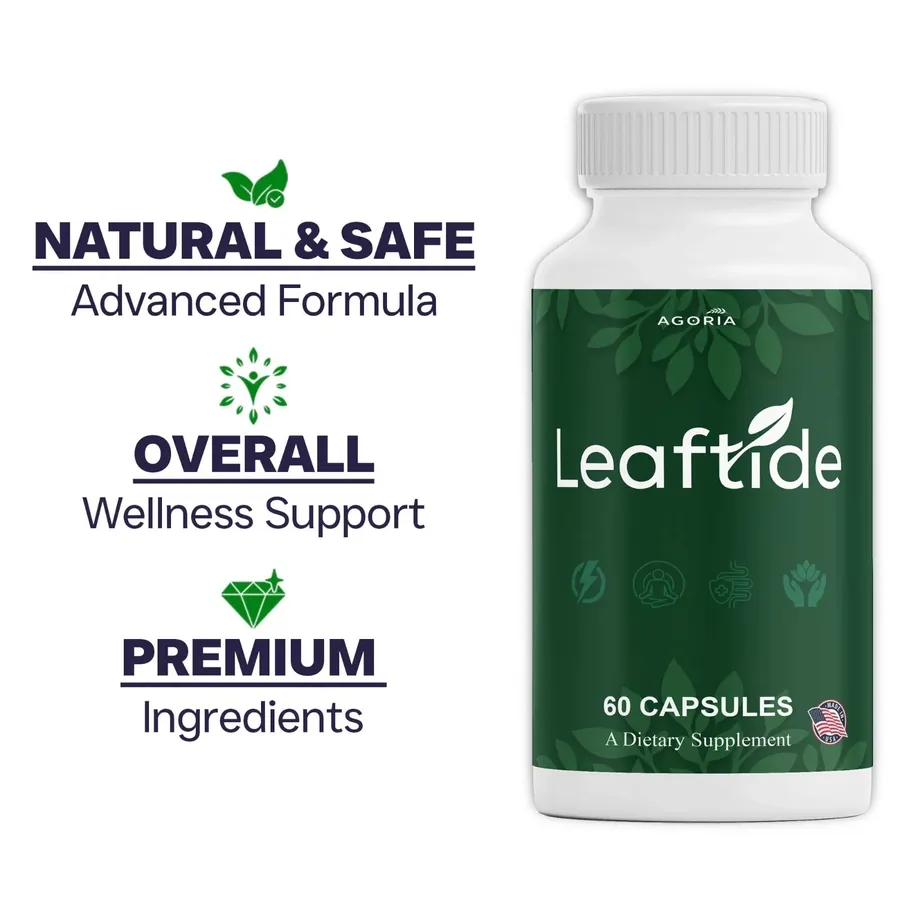
Weight loss pill red flags
The weight-loss claims the FTC calls always false, fake reviews, FDA myths and look-alike names, with Leaftide checked.
Read moreUSA Authorized Leaftide Retailer
Ready to try Leaftide?
The live listing sells a 6-bottle pack: about 6 months at 2 capsules a day, with free U.S. shipping and 30-day returns.
- Secure checkout
- 30-day window
- Ships from the U.S. with tracking